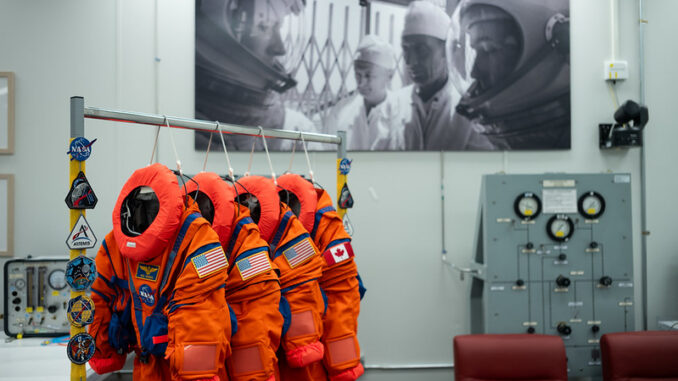
Artemis II Update!
After an exciting launch last week, Artemis II is tracking a lunar fly-by on Monday, April 6 and splash down off the coast of San Diego on Friday. The fly-by on Monday could set a record for the farthest anyone has traveled from Earth, breaking the current record – 248,655 miles away – set in 1970 by the Apollo 13 crew.
Key moments for the lunar flyby include this following. All times are Eastern and may change based on real-time operations:
Monday, April 6
- 12:41 a.m.: Orion enters lunar sphere of influence at 41,072 miles from the Moon.
- 1:30 p.m.: The science officer in mission control will brief the crew on their science goals for the upcoming flyby.
- 1:56 p.m.: The Artemis II crew is expected surpass the record previously set by the Apollo 13 crew in 1970 for the farthest humans have ever traveled from Earth.
- 2:45 p.m.: Lunar observations begin.
- 6:44 p.m.: Mission control expects to temporarily lose communication with the crew as the Orion spacecraft passes behind the Moon.
- 6:45 p.m.: During “Earthset,” Earth will glide behind the Moon from Orion’s perspective.
- 7:02 p.m.: Orion reaches its closest approach to the Moon at 4,070 miles above the surface.
- 7:07 p.m.: Crew reach their maximum distance from Earth during the mission.
- 7:25 p.m.: “Earthrise” marks Earth coming back into view on the opposite edge of the Moon.
- 7:25 p.m.: NASA’s Mission Control Center should re -acquire communication with the astronauts.
- 8:35-9:32 p.m.: During a solar eclipse, the Sun will pass behind the Moon from the crew’s perspective.
- 9:20 p.m.: Lunar observations conclude.
Follow the mission here.
Read the Original Article About Artemis II and Merit Badges
Four astronauts will leave soon for approximately 10 days of space travel as part of the Artemis II mission. The roughly 695,000-mile journey aboard the Orion spacecraft will take the crew about 4,600 miles beyond the moon and back. Artemis II could inspire Scouts to earn the Space Exploration merit badge. But several other badges are also related to a moon trip.
Digital Technology merit badge
Throughout the Artemis II mission, voices, images, video and mission data must travel thousands of miles. NASA’s Near Space Network and Deep Space Network make this happen using relay satellites and antennas around the globe. These antennas provide a near-continuous connection to Orion and the crew. E.T. could have used this to phone home in 1982.
Emergency Preparedness merit badge
When Orion returns and splashes into the Pacific Ocean, hundreds of emergency personnel and a lot of equipment will help ensure the crew safely returns home. This includes a Navy ship carrying a highly trained medical team, inflatable boats, helicopters, and technicians.
Exploration merit badge
This one is kind of obvious. As part of the Artemis II mission, astronauts will see what’s called the far side of the moon. Some call it the dark side of the moon. They’ll see parts of the lunar surface few humans have seen and, most likely, some that nobody has seen. In 1968, the three Apollo 8 astronauts were the first humans to see the far side, and 24 total astronauts have seen it.
Nuclear Science merit badge
Through NASA’s Artemis missions, astronauts will return to the Moon to live and work continuously, which requires a constant source of power. The agency’s fission surface power program will provide continuous, high-power electricity in shadowed lunar areas in a collaboration with the Department of Energy.
Personal Fitness merit badge
NASA says each Artemis II astronaut will exercise 30 minutes a day to minimize the muscle and bone loss that occurs without gravity. Orion is equipped with a flywheel, a device installed directly below the side hatch used to enter and exit Orion. The flywheel works like a yo-yo, giving astronauts as much load as they put into it, maxing out at 400 pounds.
Safety merit badge
Believe it or not, one of the risks astronauts prepare for when traveling to the moon is the sun. Solar flares are the most powerful eruptions in the solar system, and some unleash more energy than a billion hydrogen bombs. During their 10-day flight, NASA and the National Oceanic and Atmospheric Administration will monitor the sun and space weather conditions to make real-time decisions to protect the astronauts.
Signs, Signals and Codes merit badge
Language learning company Babbel published a brief guide to astronaut lingo, which tells us that LOX stands for liquid oxygen. Nadir means the downward direction from a spacecraft to the center of a planet below. It’s the opposite of zenith. If an astronaut has “puffy head bird legs,” it means they feel congested and have wobbly legs because of the loss of gravity.
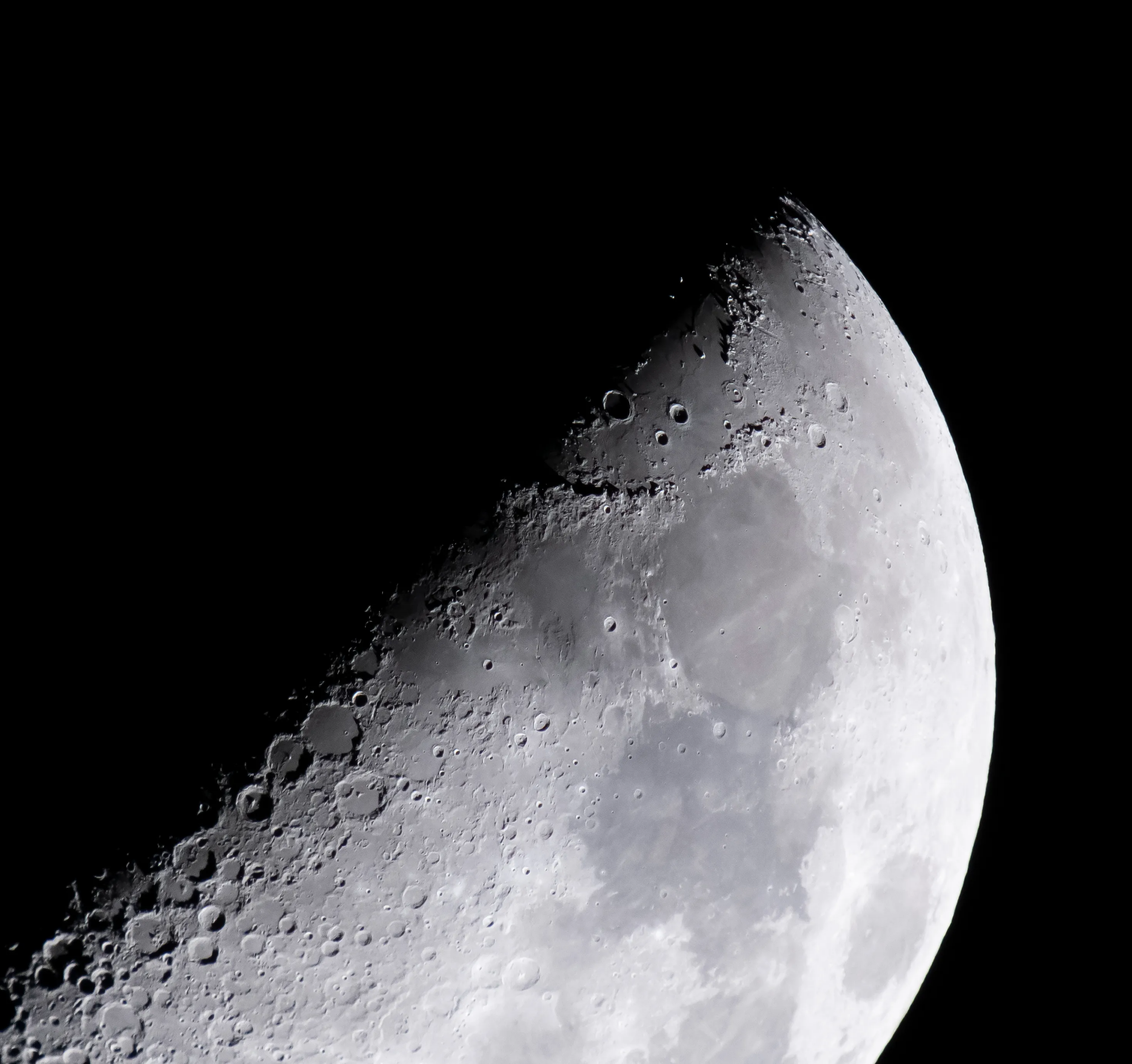
On May 8, 2022, NASA’s exploration ground systems’ program manager Shawn Quinn captured this crop of a full frame image of the Hadley–Apennine region of Earth’s moon, including the Apollo 15 landing site (very near the edge of the shadow of one of the lunar mountains in the area). Building upon the pioneers from the Apollo Program, Artemis crews will plan to verify capabilities for humans to explore deep space and pave the way for long-term exploration and science on the lunar surface. Photo: NASA/Shawn Quinn