
Nestled in the woodlands of southeastern New Hampshire sits nearly 1,000 acres devoted to Scouting adventure and fun. Part of it is also devoted to what Camp Ranger Robb Ellis calls “the ultimate conservation project.”
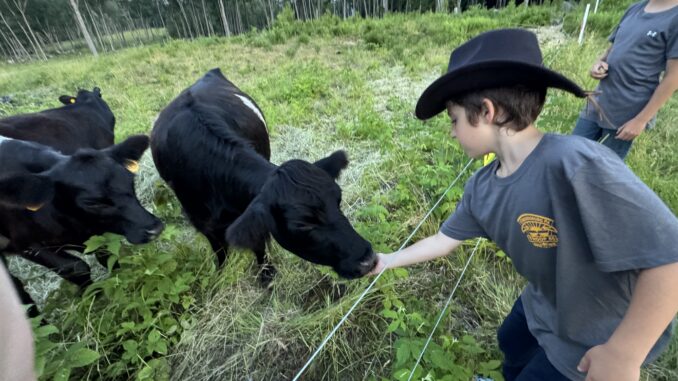
For the past three years, T.L. Storer Scout Reservation, a Spirit of Adventure Council camp, has invited more than Scouts to its property. A small herd of cattle has also visited the camp.
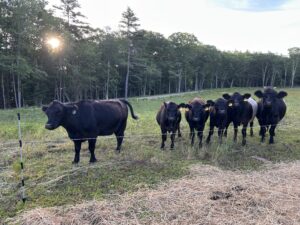
It’s a partnership the camp has forged with a local farmer, allowing his yearling cows to graze on several acres of pasture at the camp. This gives the soil on both the farmer’s land and the camp’s pasture the chance to recover while the cows are off it.
It’s called rotational grazing, a farming strategy that can produce healthier pastures and livestock because grass can regrow. Cattle help the land by grazing, which stimulates root regrowth. Their manure adds organic matter to the soil, and they till the soil by stamping it with their hooves.
It’s a strategy borrowed from nature. Ellis likens it to how bison would feed on the land long ago and then move because of predators.
“We’re simulating that by moving them,” Ellis says.
Learning about livestock
At T.L. Storer, Scouts get to interact with animals as they learn about them. This past summer, the camp offered “Cow Camp,” where both Cub Scouts and Scouts BSA members studied the cows and the goats that stay on site year-round. A total of 50 Scouts BSA members worked on the Animal Science, Farm Mechanics, and Soil and Water Conservation merit badges.
“It’s giving kids a hands on experience, and they can learn how to make healthy food choices and where their food comes from,” Ellis says.
The hands on experience isn’t just petting the cows and goats. The Scouts get their hands dirty by feeding the animals and shoveling manure.
Scouts aren’t the only ones who get this hands on experience. T.L. Storer also invites students involved in 4-H to learn on the property throughout the year.
It’s about teaching youth how to be good stewards of the land and understanding how elements like soil, water, carbon and livestock are interconnected.
“If you’ve got ground beef, they learn that it came off this part of the cow,” Ellis says. “When they go into the freezer section at the grocery store, they understand the value of that.”

