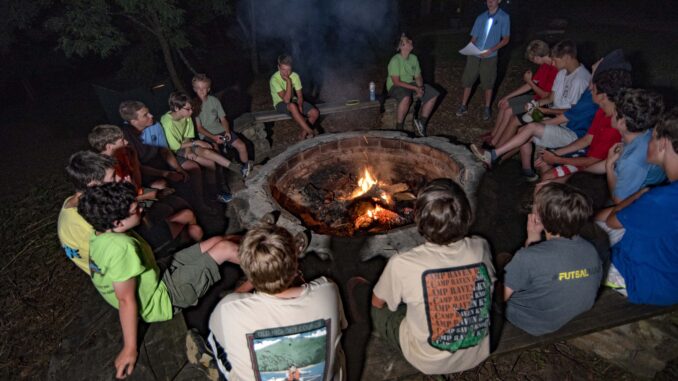
If you’ve ever been around a campfire after a long day of hiking or fishing, you probably noticed an increase in chatter from teens who normally shy away from conversation.
This isn’t surprising, says Michael L. McClam, medical director of inpatient and residential services at the Menninger Clinic in Houston, Texas. He’s a member of the Scouting America mental, emotional and social health (MESH) task force, whose research shows that campfire environments naturally encourage deeper conversations.
“The key is creating a relaxed, nonjudgmental environment,” McClam says. “When teens feel they can speak without being judged or criticized, they’re more likely to open up and be vulnerable.”
Getting Scouts to open up
Informal settings like campfires or hikes lower the pressure that comes with direct, structured conversations. It’s a place where teens feel emotionally safe and are more likely to open up.
And just the nature of a campfire helps kids feel comfortable talking as well. They’re usually sitting side by side instead of face-to-face, which can feel confrontational. And the fire creates a natural buffer from the person directly opposite.
“That arrangement minimizes the potential of feeling judged or put on the spot,” McClam says.
Whether created with a campfire, a hike or knot tying, side-by-side chats remove the pressure of constant eye contact and allows kids to focus on something else while talking. That gives them less mental bandwidth to worry about being judged.
Making a spark
Adults engaging around the campfire also plays a role. When parents and leaders share their own relatable feelings, it signals to teens that their experiences aren’t singular and they don’t have to isolate them.
“Sharing personal stories can help teens understand that adults have gone through similar experiences,” he says. “That increases the possibility that they’ll share their own.”
Creating the “campfire effect”
Whether you’re trying to foster conversation around a campfire or just talk to your Scout at home, McClam says the key is to let the child lead.
“The best way to create a campfire effect is to be present without being overbearing,” McClam says.
To set the stage for an open conversation, try these approaches:
- Be close by and available, but don’t push kids to talk when they’re not ready.
- Utilize times you’re sitting side by side like meals, drives, board games or doing activities together to give kids a low-pressure space to share what’s on their minds.
- Show genuine interest in what kids say. Keep your phone out of sight and really listen.