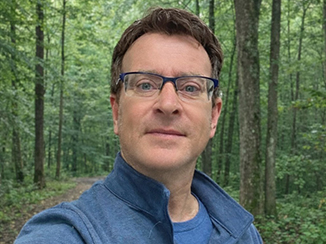
Two recent emergencies reinforced what Jason Yoder already knew. There’s a need for cardiopulmonary resuscitation (CPR) and automated external defibrillator (AED) training in his community, and Scouting should take the lead.
“I have a friend whose father had a heart attack in a restaurant, and somebody stepped up to perform CPR for about 12 minutes until the medical team arrived and took it from there,” says Yoder, program director at Scouting America’s LaSalle Council in northern Indiana. “I have a Scouting volunteer who arrived at the scene of an accident and performed CPR for about eight minutes until paramedics could get there. This happens more than you might think. Having these skills saves lives.”
Just in time for American Heart Month in February, LaSalle launched 100 Hearts in 100 Days, a program designed to train 100 individuals in CPR and AED use within the first 100 days of the year. The program was designed not only to equip Scouts, adult volunteers and leaders with lifesaving skills but also to embody the Scout motto — Be Prepared — at a practical, community-impact level. Yoder says the idea behind 100 Hearts in 100 Days grew from a recognition that while Scouting has long emphasized first aid and emergency preparedness, many communities still lack a broad base of residents who can respond to cardiac emergencies.
Here’s how they did it
The planning process for 100 Hearts in 100 Days included several key steps that any Scouting council could adopt.
Define Clear, Measurable Goals
LaSalle set a target of 100 people across 12 sessions. They invited Scouts of all ages, their parents and Scout leaders to participate, but anybody else in the community could register. Yoder says there isn’t an age minimum for this training. If a boy or girl is strong enough to apply chest compressions and can understand how to operate an AED, they can be trained. The number of people trained is flexible. Smaller councils might want to do 50 Hearts in 100 Days. Larger ones might set the goal at 200.
Keep the Schedule Consistent
The council is offering training sessions through April. Spreading out the training makes the program manageable for volunteers and creates multiple options for Scouts and community members to participate.
Leverage Accredited Instruction
Scouting’s health and safety resources encourage the use of nationally accredited CPR/AED training. Partnering with the American Red Cross and the American Heart Association ensures current, standardized procedures, plus valid certification upon completion. The council worked with hospitals and local fire departments to access the necessary equipment like mannequins and AED simulators.
Engage Stakeholders Early
Yoder says the success of the campaign hinges on early buy-in from key Scouting volunteers, council training chairs and district executives, as well as local fire departments and health partners. Establishing a planning team weeks in advance helps align training space and instructor availability.
Develop a Marketing Campaign
LaSalle used newsletters, social media and council events to publicize the program. They got some help when local television station ABC57 reported on it.
Track and Share Outcomes
Councils should track attendance and certifications earned. A survey to gather feedback at the end is a good idea. Sharing results through council reports and social media can boost future community participation and support.
What happens in one of these classes?
A typical AED can be intimidating if you don’t know how to use it. Training classes help participants recognize when somebody is in cardiac arrest and whether use of the AED is the best practice. The class covers how to turn on the AED, where to place the pads and how to follow voice prompts. For CPR, students learn to check for responsiveness and breathing, call for help, and begin high-quality chest compressions. Instructors demonstrate proper hand placement and compression depth. Rhythm is important as well, meaning how often you press on the chest. Typically, students practice by kneeling over a mannequin and pressing on its chest with the palm of a dominant hand.
Did You Know?
To obtain Scouting America’s First Aid merit badge, AED and CPR training are required. It’s No. 7 of 15 steps.
- Heart Attack. Do the following:
(a) Explain what a heart attack is.
(b) Describe the symptoms and signs of a heart attack and first aid for this condition.
(c) Describe the conditions that must exist before performing CPR on a person.
(d) Demonstrate proper CPR technique using a training device approved by your counselor.
(e) Explain the use of an automated external defibrillator (AED).
(f) Demonstrate or simulate the proper use of an AED, using an AED training device if available.
(g) Identify the typical location(s) of one or more AED(s) at public facilities in your community, such as your school, place of worship, unit meeting place, sports facilities, and/or camp or by using a smart phone app. Discuss the reasons for choosing locations like these.